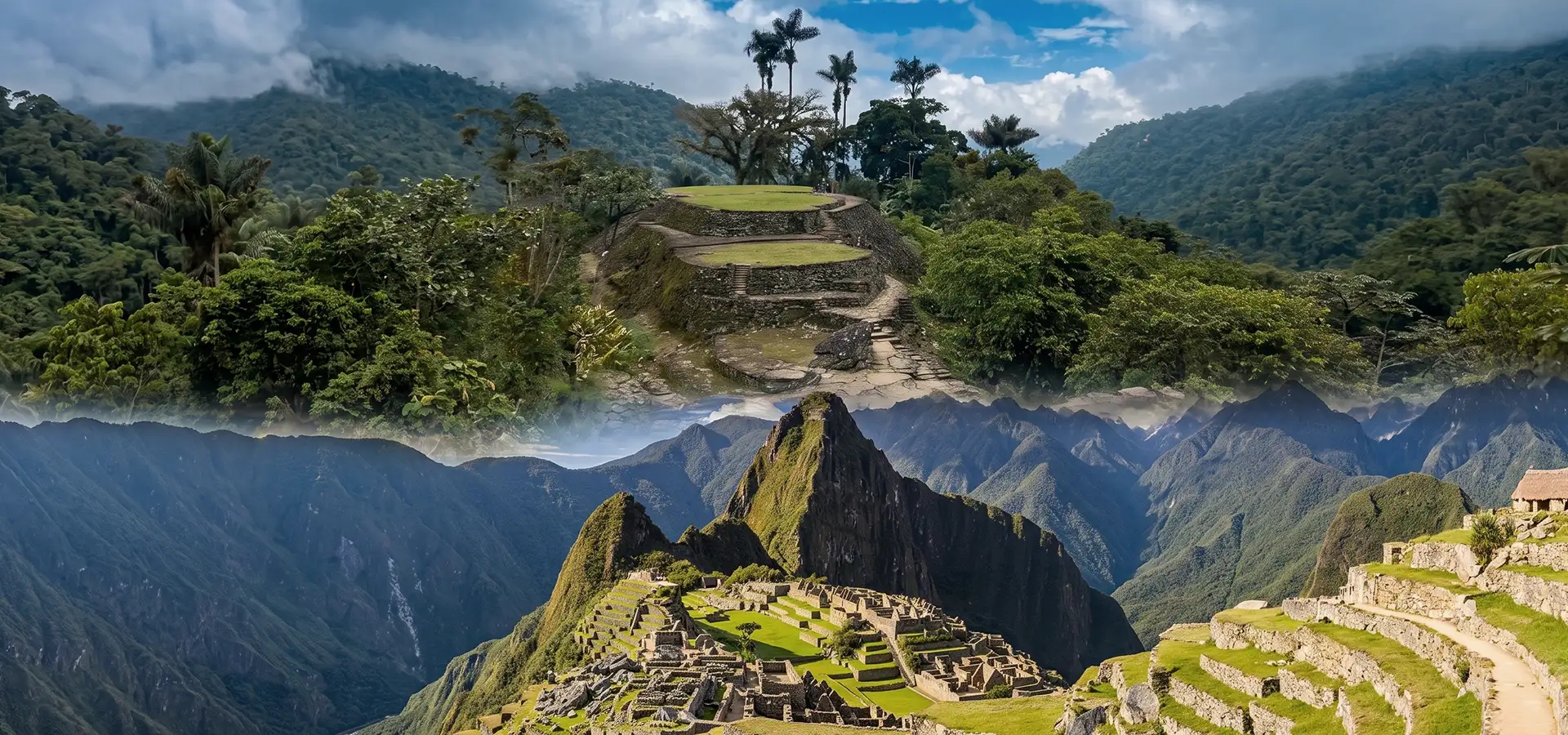
When talking about South America’s great ancient cities, one name comes to mind almost immediately: Machu Picchu. Its impressive stone structures, the mountains that surround it, and its significance in the history of the Inca Empire have made it one of the most renowned archaeological destinations on the continent.
But farther north in the Andes, the mountains of Colombia’s Sierra Nevada de Santa Marta hold the remains of another ancient civilization, hidden in the jungle for centuries: The Lost City Colombia, an archaeological site that predates Machu Picchu.
Although both sites were built by ancient Indigenous civilizations and are set in breathtaking mountain landscapes, reaching them and experiencing them are two very different adventures. While Machu Picchu welcomes millions of travelers from around the world, Colombia’s Lost City offers a much more adventurous experience. Reaching its stone terraces requires a multi-day trek through the jungle, crossing rivers, climbing mountains, and passing through territories inhabited by Indigenous communities.
Beyond their differences in popularity, both sites tell fascinating stories about the civilizations that inhabited South America long before the arrival of Europeans. However, Colombia’s Lost City offers something that goes beyond its ancient structures: the journey to reach it, the natural beauty of the Sierra Nevada de Santa Marta, and the connection with Indigenous communities make the trek an essential part of the experience.
In this guide, we’ll compare these two extraordinary destinations, explore their histories, and uncover why Colombia’s Lost City deserves a prominent place among South America’s great archaeological and adventure experiences.
Two Ancient Cities, Two Different Cultures
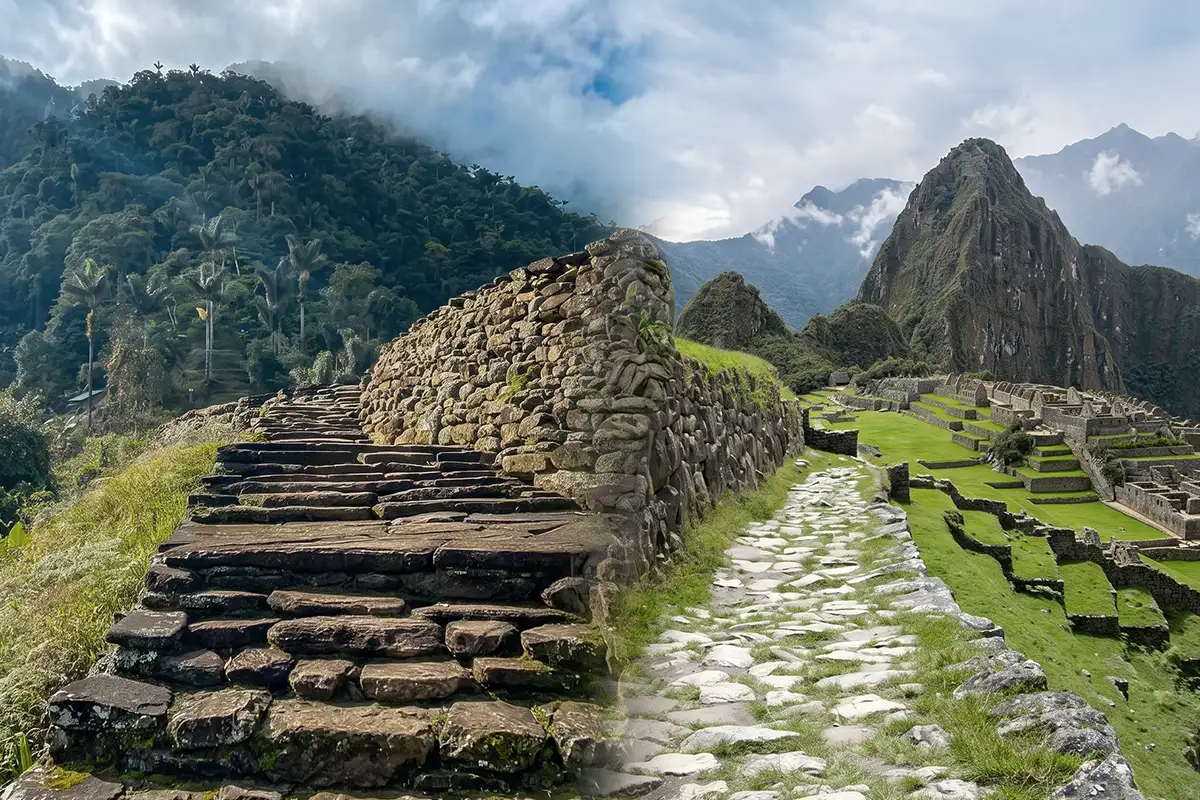
At first glance, these destinations may seem similar. Both are ancient cities built amid breathtaking mountain landscapes and stand as testaments to the achievements of great pre-Columbian civilizations. However, behind their stone terraces lie very different stories.
Deep in the Sierra Nevada de Santa Marta lies Teyuna, now known as Ciudad Perdida (the Lost City), one of the most important archaeological remains of the ancient Tayrona civilization. Its development dates back to approximately the 9th century, several centuries before Machu Picchu was built.
Machu Picchu, on the other hand, was built around the 15th century, during the expansion of the Inca Empire. Its architecture, strategic location, and integration with the Andean landscape have made it one of the most recognizable symbols of Inca civilization and, over time, one of South America’s most famous tourist destinations.
But there is one particularly interesting difference between the two: Teyuna is more than just an archaeological site from the past. The Sierra Nevada de Santa Marta remains the ancestral homeland of Indigenous peoples such as the Kogi, Wiwa, Arhuaco, and Kankuamo, who maintain a deep cultural and spiritual connection to this territory.
Visiting Teyuna means stepping into a landscape where the past and present remain closely connected. Travelers do more than admire ancient ruins: they trek through the jungle, follow ancestral trails, and venture into a mountain range that continues to hold profound significance for Indigenous communities.
And this is where one of the key differences between Machu Picchu and Lost City becomes clear: how you get there.
A Comparison to Understand Their Differences
Although both destinations hold tremendous historical and archaeological significance, the experience they offer travelers is very different.
| Feature | Lost City – Colombia | Machu Picchu – Peru |
|---|---|---|
| Location | Sierra Nevada de Santa Marta, Colombia | Cusco Region, Peru |
| Civilization | Tayrona culture | Inca Empire |
| Approximate Origins | Around the 9th century | Around the 15th century |
| Elevation | Approx. 1,200 m above sea level | Approx. 2,430 m above sea level |
| How to Get There | Multi-day trek; accessible only on foot | Train and bus, or trekking routes such as the Inca Trail |
| Surroundings | Tropical rainforest, rivers, and mountains | Andean mountains and cloud forest |
| Trek Duration | Typically 4–5 days | Can be visited in a single day, depending on the itinerary |
| Type of Experience | Adventure, nature, culture, and archaeology | Archaeology, landscapes, and culture |
| Relationship with Indigenous Communities | The territory remains ancestral land inhabited by Indigenous peoples | The surrounding region retains a rich Andean cultural heritage |
| Tourism | More limited access and a multi-day trekking experience | Major international tourist destination with high visitor numbers |
| Key Feature | The jungle trek is an essential part of the experience | The ancient citadel and its spectacular scenery are the main attractions |
The comparison above highlights a fundamental point: these are not two versions of the same destination. Machu Picchu can be part of a relatively short trip, while visiting Colombia’s Lost City requires setting aside several days for the trek. Here, the journey is more than just a way to reach the destination; it is an essential part of what makes the experience so special.
Perhaps this is one of the best ways to understand the Lost City Tayrona: it is not simply a place you visit, but a place you discover one step at a time.
The Journey Is Part of the Destination
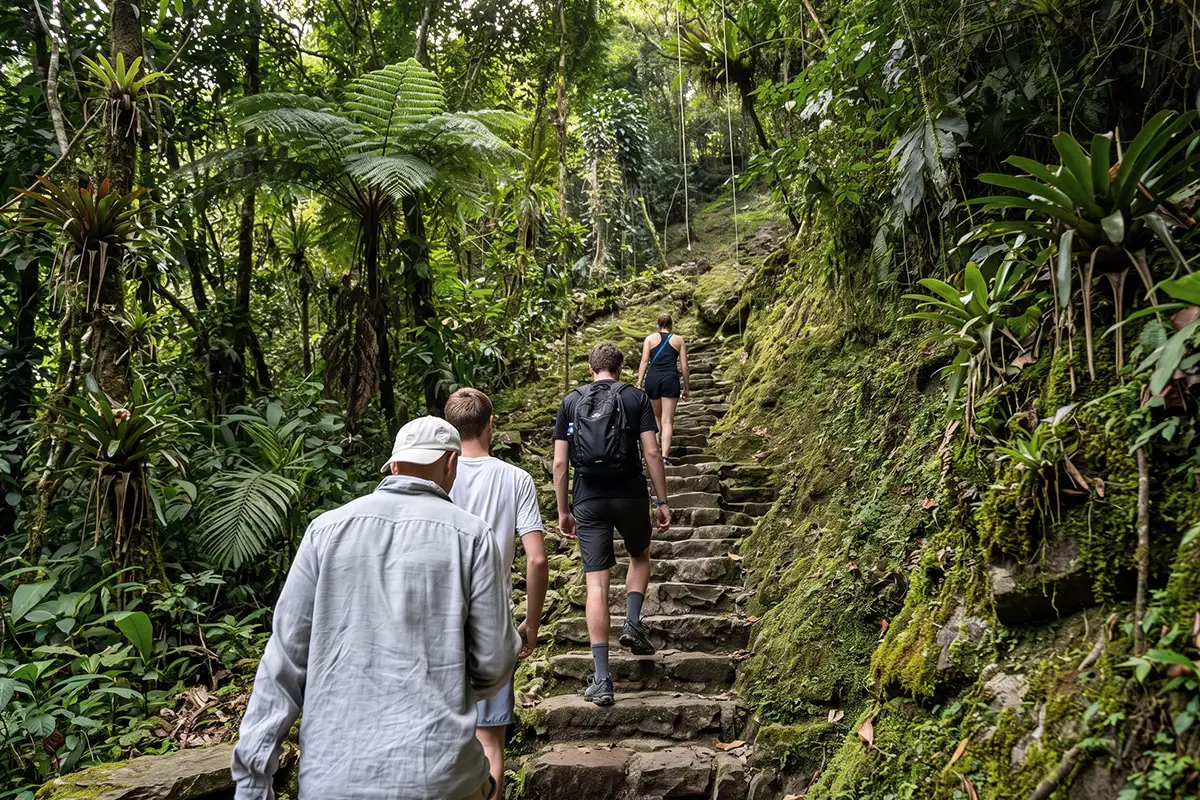
Machu Picchu can be reached using different transportation options, and travelers can also choose to hike there along the Inca Trail. Lost City, on the other hand, requires a trek on foot along trails that cross the Sierra Nevada de Santa Marta. There is no train to take visitors closer, no road leading to the ruins, and no transport that allows them to skip the journey. The trek is an inseparable part of the experience.
Over several days, the trail winds through a tropical rainforest landscape filled with rivers, mountains, bridges, small communities, and ancient paths. The climate is also part of the challenge: heat and humidity can make the trek demanding, but the rivers and streams along the way offer opportunities to cool off before continuing the adventure.
And then something happens that is difficult to replicate when visiting a conventional archaeological site: anticipation builds with each day of hiking.
Teyuna’s stone terraces do not suddenly appear before travelers as they step out of a vehicle. First, they must cross the mountains and then climb approximately 1,200 stone steps leading to the heart of the ancient city.
That effort transforms the arrival into something truly meaningful. The stone structures, terraces, and vegetation surrounding Teyuna’s archaeological ruins are not simply features to admire and photograph; they mark the end of a journey in which the trail itself becomes an essential part of the experience.
The Jungle Takes Center Stage
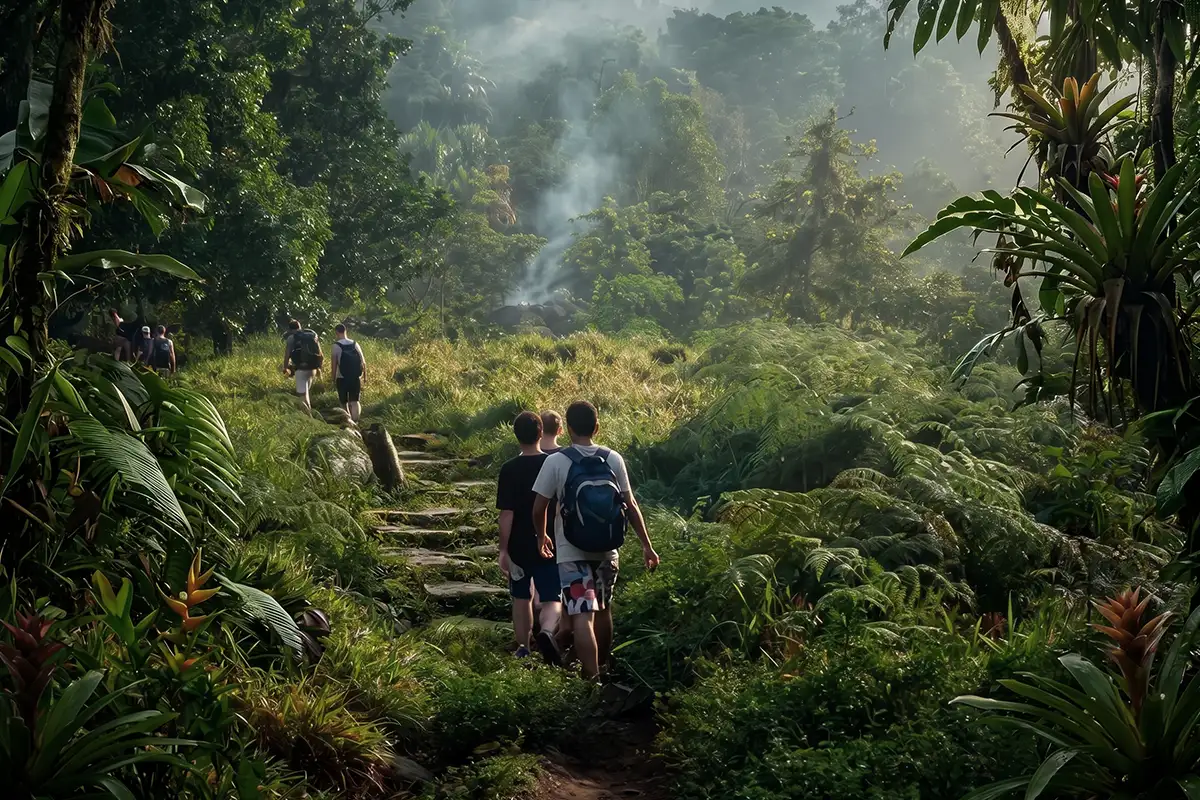
Perhaps one of the features that most distinguishes the Lost City Colombia from other major archaeological destinations is that nature is more than just a backdrop. The Sierra Nevada de Santa Marta accompanies travelers throughout the entire trek. The tropical rainforest, the sounds of wildlife, the changing scenery, and the rivers give the journey a character of its own.
But nature is not the only presence along the trail. The route crosses ancestral lands where Indigenous communities, including the Kogi and Wiwa peoples, continue to live. For these communities, Teyuna and the Sierra Nevada de Santa Marta hold profound cultural and spiritual significance.
For this reason, discovering Teyuna also means connecting with a living territory that continues to hold deep meaning long after its ancient terraces were built.
Getting There on Foot Changes the Experience
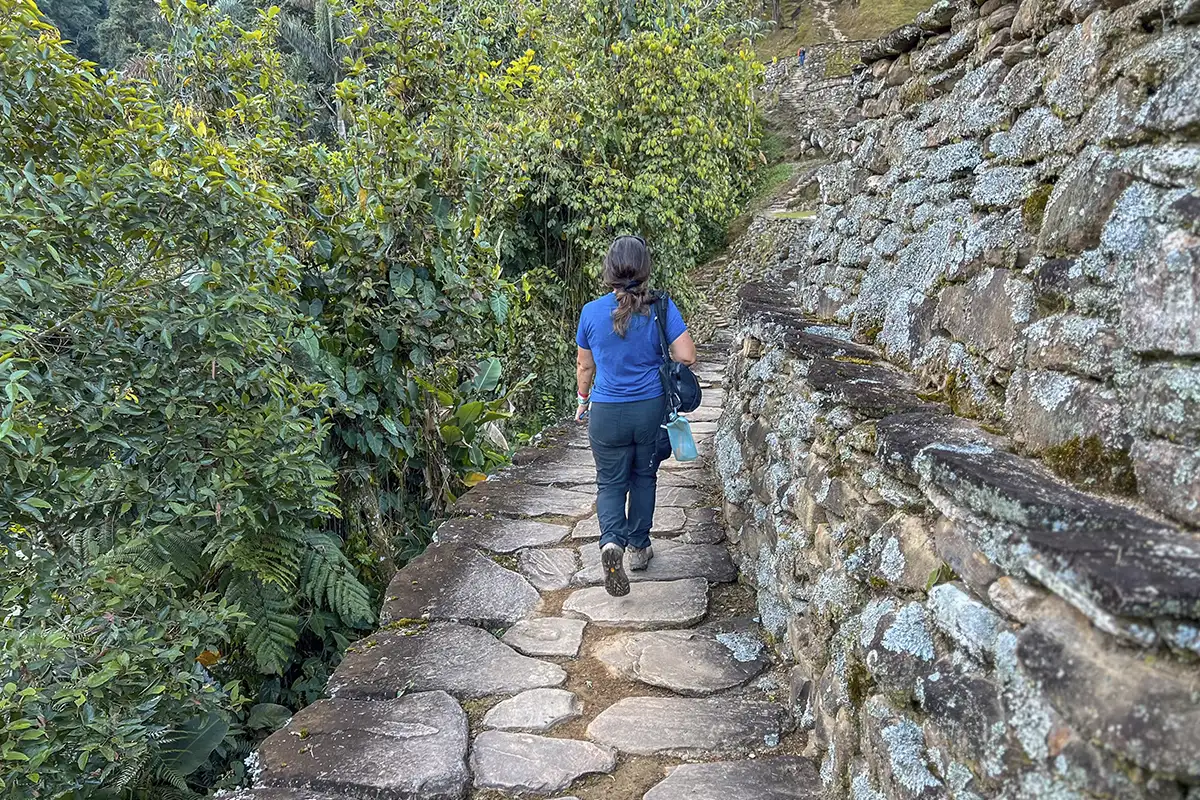
The trek turns the journey into a story that unfolds with every step. Each day reveals more of the Sierra Nevada de Santa Marta, leading travelers to Teyuna, where ancient stone structures emerge from the surrounding forest.
And perhaps that is one of its greatest appeals: while some archaeological destinations focus the entire experience on arrival, here the journey begins long before travelers catch sight of the first stone terraces.
The reward is not simply reaching an ancient city. It is crossing the mountains to discover it.
Fewer Tourists, a More Intimate Experience
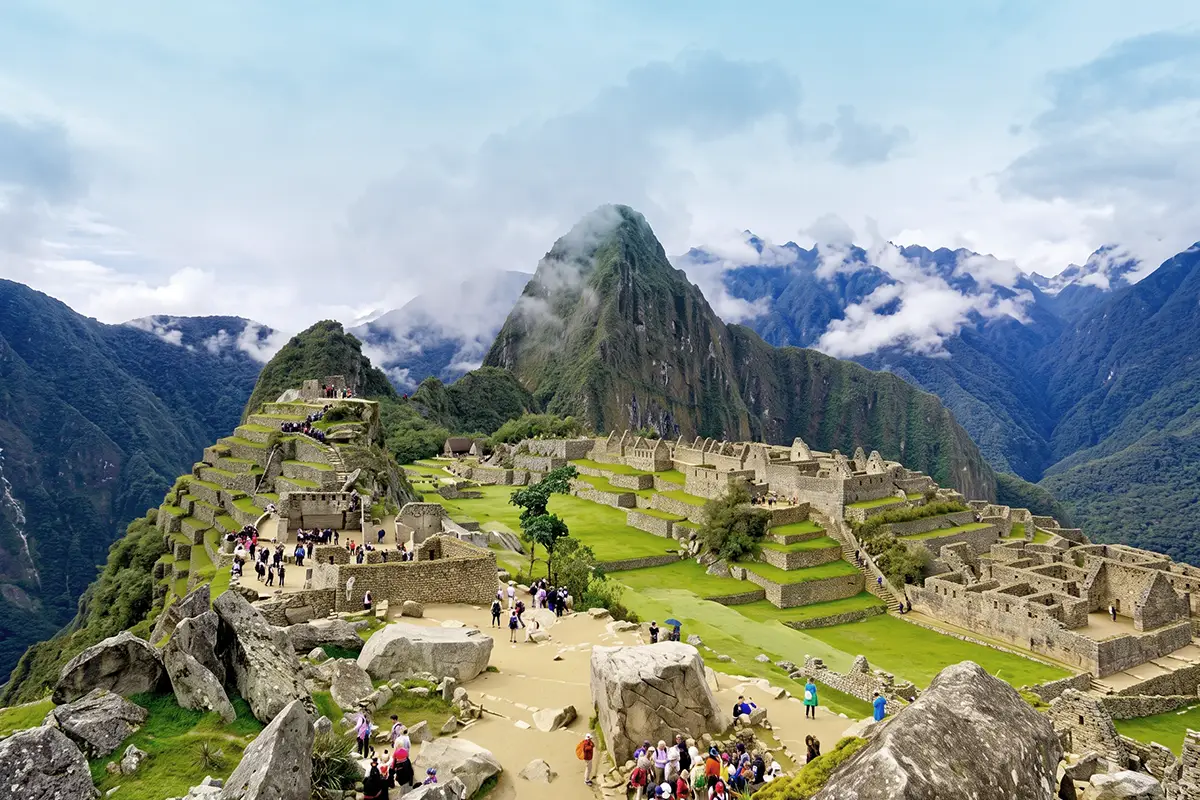
Machu Picchu’s international fame has made it one of the most visited destinations in South America. Colombia’s Lost City, by contrast, attracts far fewer visitors and can only be reached through a multi-day trek.
This difference completely changes how travelers experience each destination.
At Teyuna, visitors do not simply arrive at a tourist attraction to explore it for a few hours. Instead, they share the trail with a small group of fellow travelers, local guides, and people who live in the Sierra Nevada de Santa Marta, with the rainforest landscape accompanying them at every stage of the journey.
The smaller number of visitors also contributes to the feeling of discovering a place that has preserved much of its natural surroundings. This does not mean that Colombia’s Lost City is untouched by tourism; it welcomes travelers from around the world every year. Rather, the experience unfolds in an environment where nature, hiking, and a connection with the land take center stage.
In addition, controlled access and the requirement to trek to the Lost City Colombia organized by authorized tour operators are part of its tourism model. This allows visitors to explore the archaeological site within a territory that continues to hold immense significance for the Indigenous communities of the Sierra Nevada de Santa Marta.
And it is precisely this combination that makes Teyuna so different: archaeology, nature, adventure, and culture are not separate experiences, but interconnected parts of a single journey.
Colombia’s Lost City vs. Machu Picchu: Which Experience Are You Looking For?
Comparing these two destinations is not about deciding which one is better. Instead, it is about discovering how each offers a different way to connect with South America’s past and its landscapes.
Machu Picchu offers the chance to explore an extraordinary Inca citadel set amid the Andes Mountains. Its architecture and history explain why it has become one of the continent’s most iconic tourist destinations.
Colombia’s Lost City, on the other hand, offers something different. Here, the adventure begins long before reaching the ruins. The journey involves several days of trekking through the Sierra Nevada de Santa Marta, walking through the rainforest and crossing rivers, discovering an ancestral territory, and finally climbing up to Teyuna’s stone terraces.
The difference, therefore, also comes down to how you want to experience the journey.
If you’re looking for a world-renowned archaeological destination that can easily fit into a travel itinerary across Peru, Machu Picchu offers a unique experience.
If you’re looking to step away from the usual pace of tourism, spend several days hiking, immerse yourself in nature, and feel as though you’re discovering a hidden place among the mountains, the Lost City trek in Colombia offers a completely different experience.
And perhaps that is precisely what makes this adventure so appealing.
Neither destination needs to compete with the other to prove its value. Each has its own history, landscape, and a unique way of being discovered. In the mountains of the Sierra Nevada de Santa Marta, Colombia preserves an ancient city that brings together archaeology, nature, and Indigenous cultures in a journey that stays with travelers long after the trek has ended.
Machu Picchu is a destination the world knows. Colombia’s Lost City is a destination that still invites travelers to discover it.