
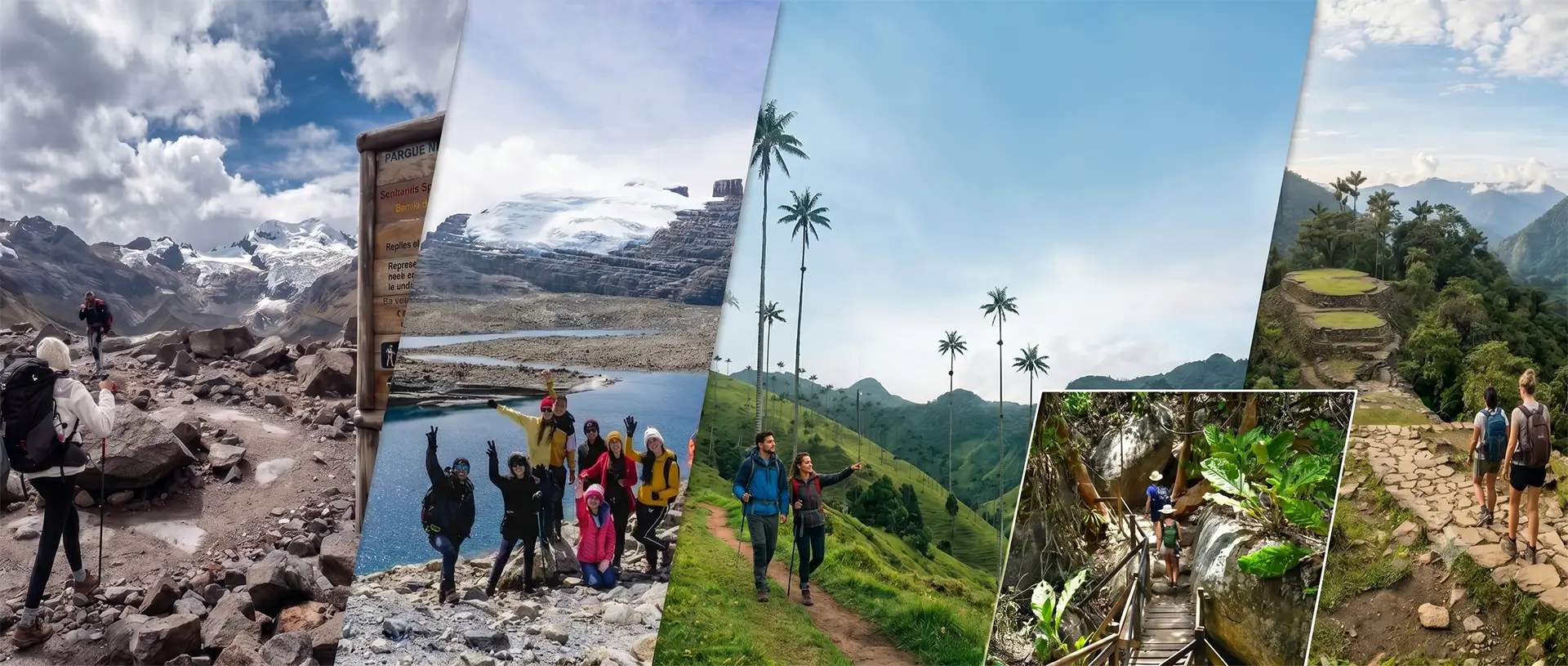
In recent years, Colombia has established itself as one of the continent’s top destinations for tourists who love adventure, hiking, and nature. Thanks to its unique geography, shaped by three branches of the Andes mountain range, the imposing mountains shelter fascinating ecosystems ranging from mist-covered highlands to glacial peaks and tropical rainforests that meet the ocean.
For those who long to experience this biological riches firsthand, ecological hikes offer the perfect way to connect with the land in a conscious and profound way.
The global boom in trekking and hiking in Colombia is not a passing fad; it stems from the opening of ancient trails and protected areas that were once inaccessible. Today, planning hiking trips across Colombia offers a unique opportunity to push physical limits while witnessing the landscape transform with every meter of elevation gain. Whether you prefer a challenging multi-day trek or a relaxing weekend hike, the country offers perfect settings for every type of hiker.
In this article, you’ll discover why hiking in Colombia is an unforgettable experience that’s accessible to any traveler. When planning a trip, it’s best to look for destinations that not only stand out for their beauty and biodiversity but also offer excellent value for money. In a world where local currencies constantly fluctuate against the dollar, the euro, or the British pound, Colombia strikes the perfect balance.
In this article, we’ll explore the 5 most notable hiking trails in Colombia:
Sierra Nevada de Santa Marta: The Journey to the Lost City of Tayrona
In the north of the country, rising abruptly from the Caribbean coast, lies the highest coastal mountain range on the planet. Venturing into this sacred territory via the trek to the Lost City is one of the most significant archaeological journeys in South America. The classic route demands significant physical commitment, guiding travelers through dense trails, steep ascents, and mountain river crossings.
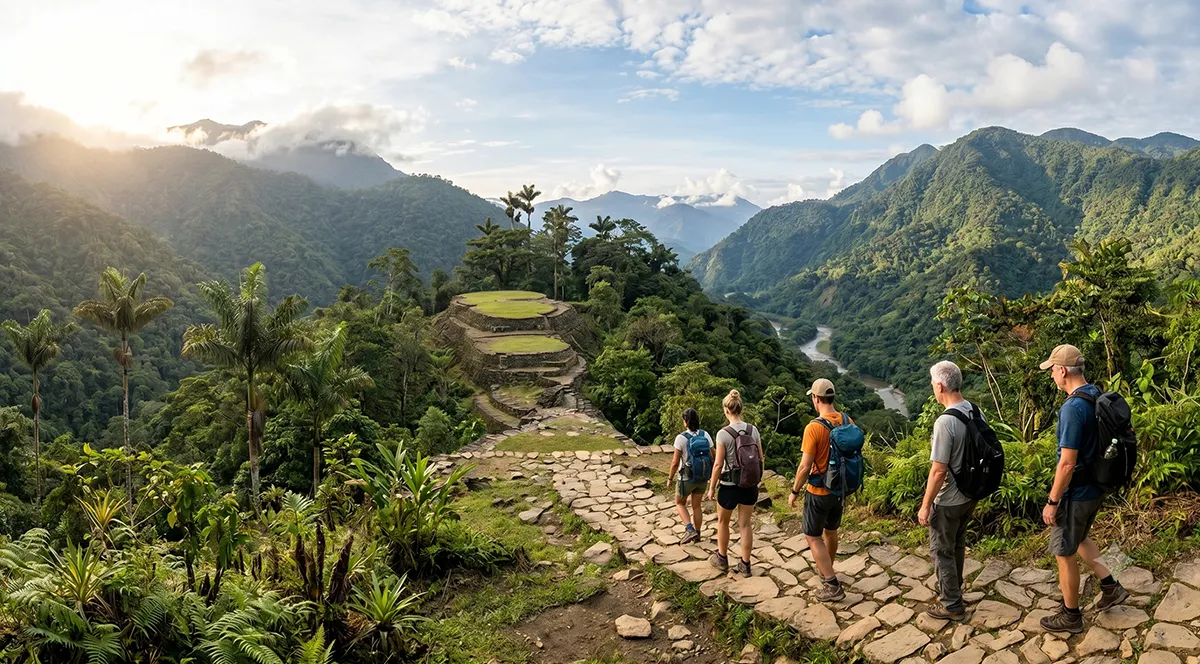
This trekking experience in Santa Marta, Colombia, is not merely a physical challenge; it is a journey of cultural immersion guided by the cosmogony of the native indigenous communities (Koguis, Wiwas, Arhuacos, and Kankuamos) who jealously guard the environment. When embarking on this hike in the Sierra Nevada de Santa Marta, adventurers face the humid tropical climate as they ascend toward the stone terraces built by the Tayrona civilization around 800 AD, hidden among the foliage of the cloud forest.
Trekking to the Lost City is one of the most outstanding ecotourism experiences in Colombia. If you only had time to visit one destination in Colombia on your next trip, this would be the one we’d most highly recommend.
- Total distance: Approximately 60 km (round trip).
- Recommended duration: 3, 4, or 5 days.
- Difficulty: Moderate to High (High humidity and hilly terrain with significant elevation changes).
Tayrona National Natural Park: Trails Between the Rainforest and the Sea
At the foot of the Sierra Nevada de Santa Marta lies Tayrona National Natural Park, an exceptional hiking destination where dry and tropical rainforests meet white-sand tropical beaches. Far from being a simple recreational hike, traversing the sectors of Cañaveral, Arrecifes, La Piscina, and Cabo San Juan de Guía requires stamina due to the intense coastal heat and the uneven terrain, covered with roots and deep sand.
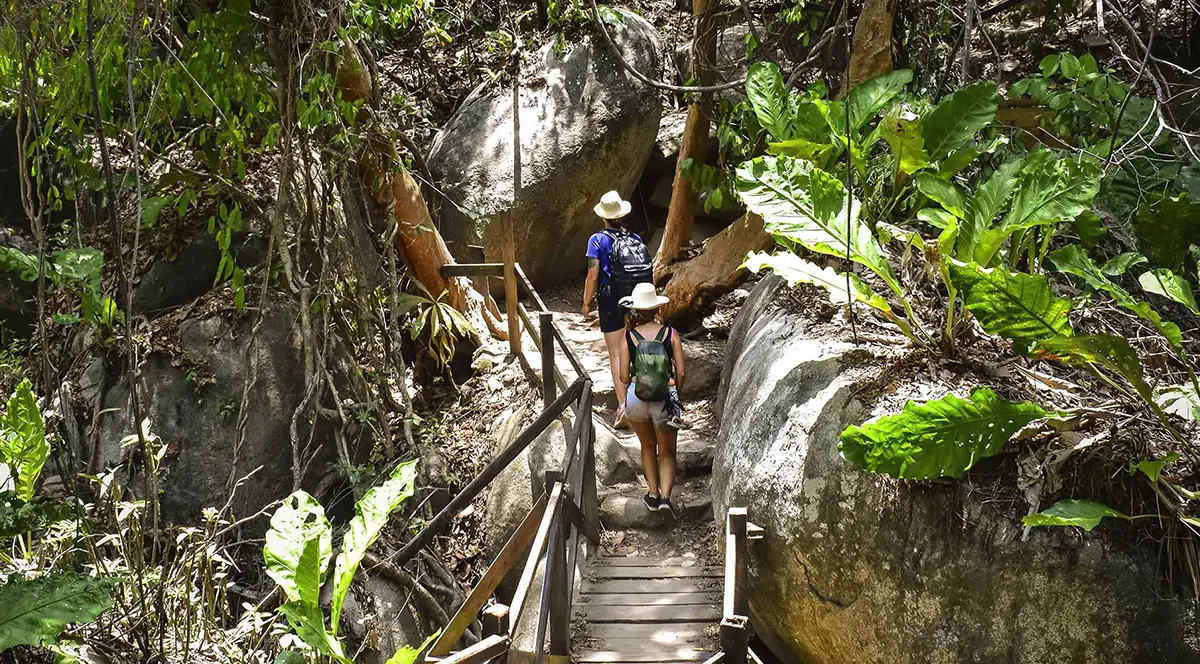
The trek to Cabo San Juan del Guia stands out unquestionably as the most notable route in Tayrona Park. During this nature hike, it is common to spot endemic wildlife such as the white-headed marmoset, the capuchin monkey, and a vast variety of tropical birds. The perfect contrast between the physical demands of this jungle trail and the subsequent rest by the turquoise waters of the Caribbean Sea makes this circuit a fundamental part of experiencing the true biodiversity of Santa Marta.
The Cocora Valley: Outdoor Hikes Among Giant Wax Palms
Located in the department of Quindío, in the heart of the Coffee Region, the Cocora Valley offers one of Colombia’s most iconic and visually stunning trails. This area is the primary habitat of the Quindío wax palm (Ceroxylon quindiuense), Colombia’s national tree, whose towering trunks can reach up to 60 meters in height, piercing through the dense Andean fog.
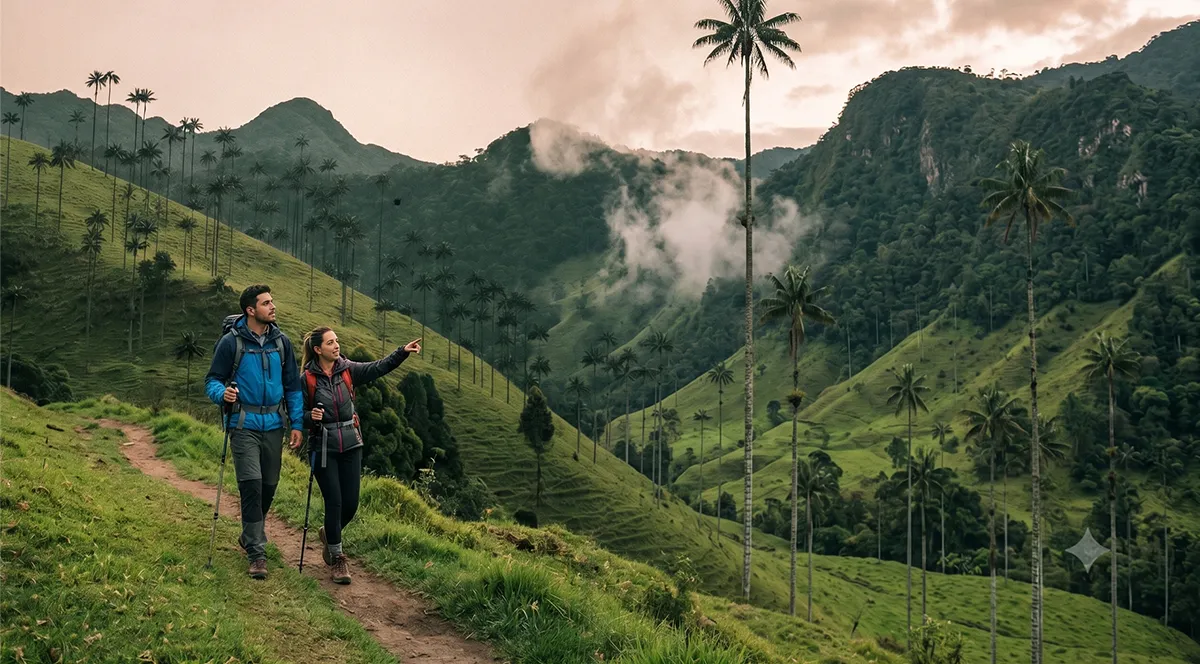
This natural sanctuary is ideal for those who enjoy outdoor hiking and wish to explore well-marked yet challenging trails.
The traditional circuit takes hikers through a forest reserve where they cross suspension bridges over the San José River, ascend to the Acaime Hummingbird Reserve, and descend along the classic slope surrounded by green hills. It is a must-see for travelers seeking to experience the magic of the cloud forests via sustainably managed ecological trails.
Los Nevados National Natural Park: The Glacier Ascent of Nevado Santa Isabel
For mountaineers focused on high-altitude climbing, the majestic Los Nevados National Natural Park represents the pinnacle of Colombia’s Andean landscape. The park safeguards an ecosystem of vital importance to the water cycle: the páramo, home to the iconic frailejones. The ascent of Nevado Santa Isabel (anciently known as Poleka Kasue) stands out as one of the most awe-inspiring experiences among high-altitude options.
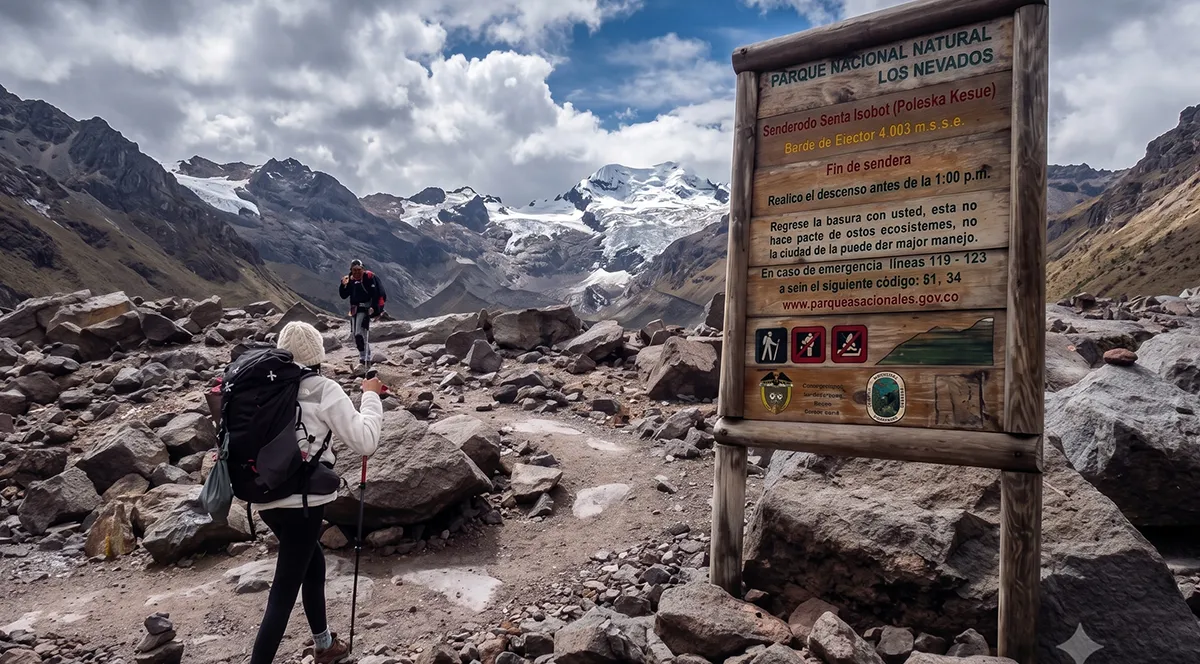
Exploring Los Nevados National Park in Colombia requires a rigorous acclimatization process beforehand, as the trails run at altitudes above 4,000 meters. When planning a hike through the mountainous terrain of this protected area, the environment rewards the effort with views of glacial lakes (such as Laguna Verde) and volcanic rock formations.
The trek through Los Nevados National Park is a living testament to global climate change, allowing visitors to experience the edge of the equatorial glacier firsthand. Every mountain hike undertaken here must be conducted in the company of certified guides to ensure operational safety and respect for the fragile flora of the páramo.
El Cocuy National Natural Park: The Most Impressive High-Mountain Circuit
If your goal is to behold the largest expanse of ice and rock in the northern Andes, El Cocuy (and Güicán) National Natural Park offers an unparalleled visual spectacle.
A careful hike along established trails such as the Lagunillas-Púlpito Trail, the Laguna Grande de la Sierra Trail, or the Ritacuba Blanco Trail allows you to approach peaks with perpetual snow that exceed 5,000 meters in altitude.
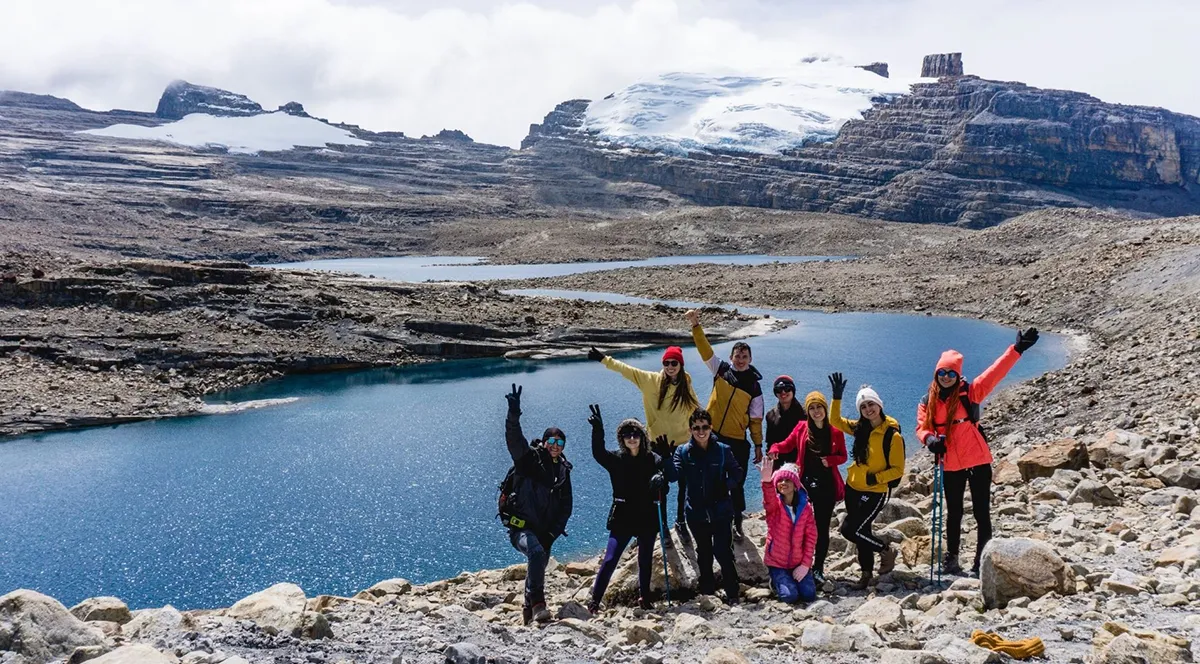
This park takes the technical and physical demands of hiking in mountainous terrain to the extreme in the country. The Andean terrain combines glacial moraines, slippery stone slabs, and freezing mountain winds. The park’s strict environmental regulations prohibit overnight stays in high-altitude areas, forcing hikers to undertake grueling day-hikes involving both ascent and descent, establishing it as the definitive circuit for advanced mountaineering in the region.
Practical Tips and Essential Gear for Hikers
The success and enjoyment of extended trekking trips are directly linked to the quality of technical planning and the suitability of the equipment chosen. Colombia’s Andean and tropical terrain is renowned for its unpredictable weather, which can shift from scorching sun to torrential rain in a matter of minutes.
Advanced Technical Footwear
Choosing the right footwear is the most critical preparatory decision for a hiker. It is essential to select proper trekking shoes with deep-treaded soles and high traction (technologies such as Vibram or similar). However, for wet, muddy, or high-altitude terrain, hiking boots are mandatory, as they provide the necessary ankle stability to prevent sprains.
Considerations for Responsible Tourism
Embarking on eco-hikes in Colombia allows one to appreciate the fragility and beauty of tropical and Andean ecosystems. By exploring the diverse and invaluable ecological trails, travelers not only minimize their environmental impact through responsible tourism practices but also boost the economy of rural communities that have found a sustainable economic alternative in ecotourism.
Packing your gear thoughtfully, following conservation guidelines, and approaching nature with respect are the only essential requirements for discovering the best-kept secrets of Colombia.